Journal · Planning
What to keep, and how to check it
A resale flat comes with someone else's choices. Some are worth keeping. Here is how we check wardrobes, floors and tiles before anyone draws a new plan.

Asha LimInterior designer, HDB homes · 7 min read
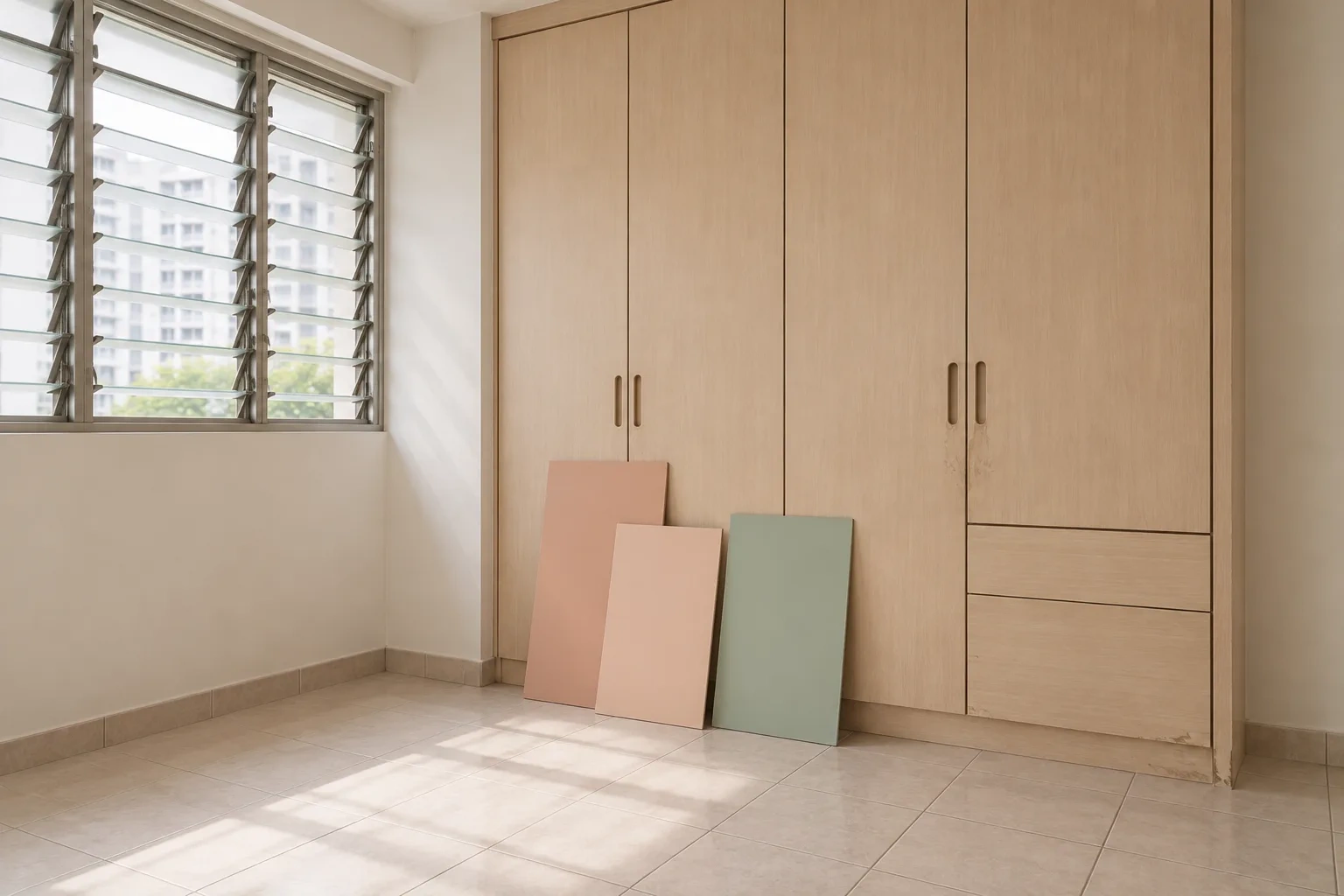
Most resale flats arrive half renovated. The last owner chose the wardrobes, the floor and the bathroom tiles, and some of those choices have aged well. Before we draw anything, we walk the flat with you and write a keep list: the things that still work and are worth building around.
The keep list does two jobs. It protects the parts of the home you already like, and it moves money towards the rooms that need it. In our home study Room to cook, keeping three wardrobes and every floor paid for most of a new kitchen.
Wardrobes and built-in joinery
Open every door and drawer. A good carcass closes square, the doors line up across the top, and the shelves do not sag in the middle. Look inside the base for swelling or a musty smell, which can mean damp behind the unit.
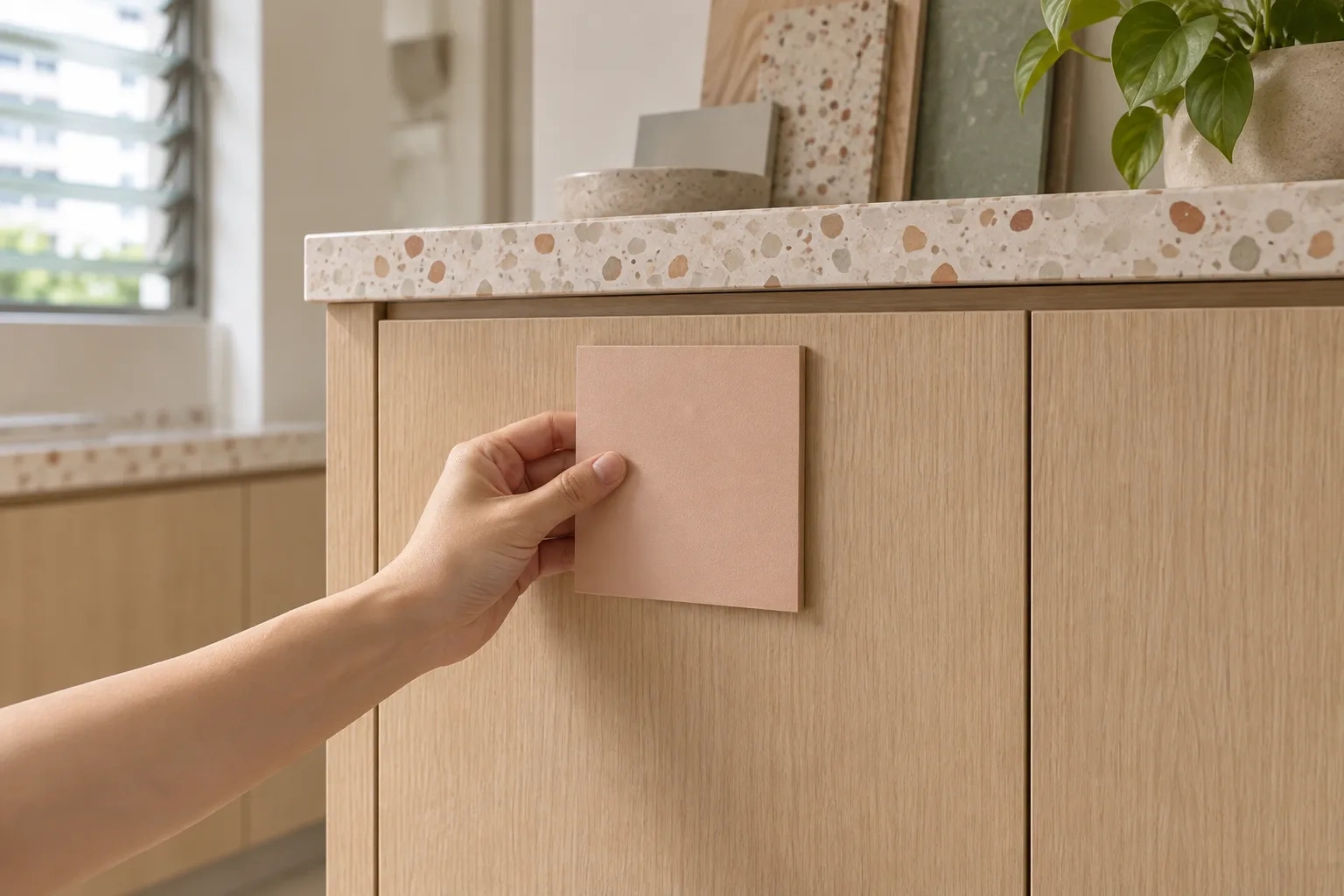
Hinges and handles are cheap to change. Swollen boards and a carcass that has dropped away from the wall are not. If the box is sound, new doors and a coat of paint can make it look like new joinery for a fraction of the cost.
Floors
Walk the whole floor in socks. Vinyl that lifts at the edges or has gaps between planks will likely need work. On tiled floors, tap each tile with a coin: a hollow sound can mean the tile has come loose from its bed. One or two hollow tiles near a doorway are common; a whole hollow room is a different conversation.
Floors run through the flat, so the choice is usually one for every room outside the bathrooms. If most of the floor is sound, an overlay can sit on top of it. An overlay needs a check of the surface underneath and the door heights first.
Bathroom tiles
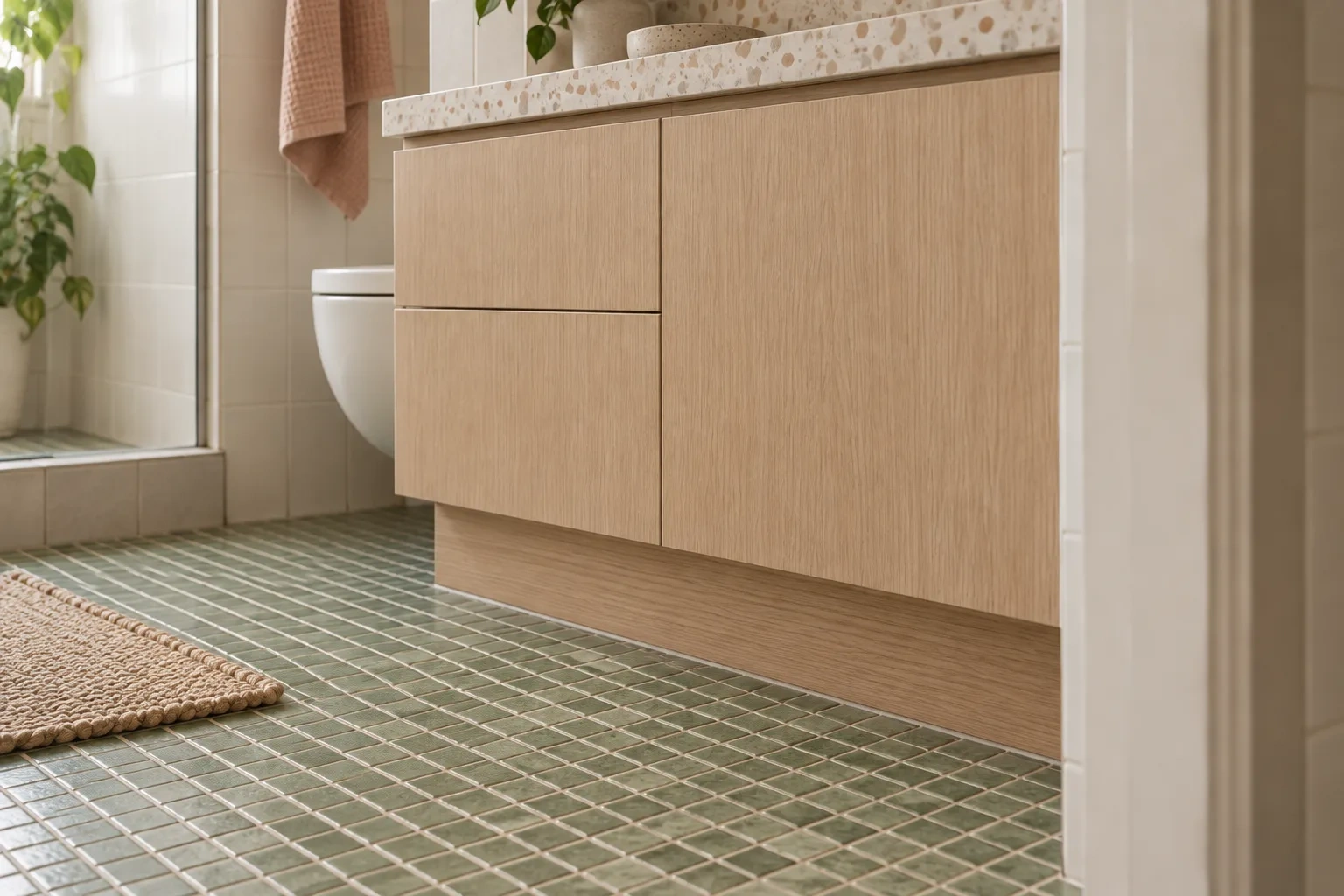
Look for cracked tiles, dark or missing grout and water that sits on the floor after a shower. Check the ceiling of the room below if you can. Tiles that look tired but are firm and drain well can often stay, with fresh grout and new fittings around them.
What you cannot judge by eye is the waterproofing behind the tiles. A refresh with new vanities and taps leaves the waterproofing alone. Replacing tiles means new waterproofing and testing. In an HDB block, the original bathroom finishes cannot be replaced within three years of the block's completion, so confirm the date if the block is new.
What you cannot see
Wiring and pipes hide behind walls, and the age of the block alone says nothing certain about them. We mark them as unresolved until an inspection decides, and keep their allowance outside the main figure so nobody mistakes it for a price.
The same goes for anything structural. A wall that looks easy to remove needs a professional review and the right approvals first.
Write the keep list
Room by room, write what stays, what gets a refresh and what gets replaced. Note anything you are unsure about as a question rather than a decision. Bring the list to the first conversation, or try it in the planner, where Keep, Refresh and Replace are the three choices for every room.
Keep is a planning choice, not an inspected condition. A designer checks each item on site before it goes into the written scope.